Select one of the options below:

Designed for secondary music educators, CSU's master's in conducting offers instruction in band, orchestra, and choir to immediately revitalize your classroom.
CSU's Master of Music Education with a conducting specialization enables you to study online during the school year and get hands-on conducting practice during a summer session on campus. Projects are customized for your particular teaching situation, so you are able to immediately apply the techniques you learn to reinvigorate your lesson plans with gained skills and knowledge.
Perfect your podium presence working with local professional choirs, bands, and orchestras, while receiving personal faculty mentorship. The annual summer conducting seminar includes hands-on workshop sessions taught by CSU faculty as well as some of the most prestigious pedagogues from around the country.
Unique to this program, you benefit from ample practice time at the podium, which provides you with immediate feedback from faculty and the musicians you lead. The curriculum focuses on developing your:
Refine your conducting techniques and learn to implement music education research, foundational principles, and analysis to enhance your effectiveness as an educator.
CSU faculty understand that each teaching situation is unique. The projects assigned in this program can be tailored to your personal classroom, allowing you to practice newly learned techniques and gain insightful feedback from instructors. The online Master of Music Education curriculum offers the flexibility to study from wherever you are during the school year and the opportunity to immediately apply what you learn to your classroom.
Graduates report that the improved conducting skills they learn throughout this program increase their teaching effectiveness dramatically. In addition to an improved classroom, many school districts offer substantial raises to teachers who earn a master's degree.
Graduates are also prepared for more competitive, combined teaching positions (ex. band/orchestra or orchestra/choir) because the program offers instruction in all three areas. Upon graduation, you will be qualified for additional employment opportunities as well, such as church choir/orchestra positions or conducting community musical theater productions.
Hear what students are saying about our conducting master's degree program and how online courses and hands-on training helped them become more effective music educators.
Jeremy, Katina, and J.J. share how working with professional musicians, orchestras, bands, choirs, and master conductors has helped them gain skills that are immediately applicable in their classrooms.
Hear from students and faculty to get a sense of what it’s like to study online with CSU, and how a graduate degree can enhance your life.
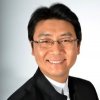
Dr. James Kim is currently the director of Choral Activities at Colorado State University. He directs the CSU Chamber Choir and also teaches undergraduate/graduate conducting, choral literature, and choral techniques.
After earning two degrees from University of Southern California, James Kim was invited by the Internationale Bachakademie Stuttgart to study with Helmuth Rilling for three years. In Europe, he participated in numerous workshops and festivals as an active conductor, notably such as Europisches Musikfest Stuttgart 99, Bachwochenende, and Sommerakademie. He was also selected as one of five conductors from around the world to study with Frieder Bernius in a masterclass sponsored by the International Federation of Choral Music in Namur, Belgium.
During the summers of 2000 and 2002, he was selected as an assistant conductor for the Opera Theater of Lucca held in Lucca, Italy. During the past 2001-02 season, he had served as the Interim Artistic Director for the Indianapolis Symphonic Choir. Previously, Dr. Kim taught conducting at University of Cincinnati and at Simpson College. In 2002, he was selected and invited as a Conducting Fellow for the Chicago Conducting Workshop and Masterclass presented by the Chorus America and the Chicago Symphony Association.
In November 2011, Dr. Kim and CSU Music hosted the biennial national conference of the NCCO in Fort Collins where the CSU Chamber Choir was featured as the main choir for the three-day conference. Kim is also the founding artistic director of the Colorado Bach Ensemble, which received acclaimed reviews of their inaugural season concerts with Bach's B Minor Mass and Handel's Messiah. Choirs under his direction have sung at international and national stages including National Collegiate Choral Organization, ACDA, Chang-won Grand-Prix Choral Festival/Competition, and Aspen Music Festival.
James Kim received B.M. and M.M. from University of Southern California and the D.M.A. from CCM. His major teachers include William Dehning, and Earl Rivers.
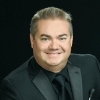
Dr. Jayme Taylor is assistant professor of music and the associate director of bands at Colorado State University where he conducts the Symphonic Band and serves as the director of athletic bands directing the Colorado State University Marching Band, Rampage Basketball Band, and Presidential Pep Band. Prior to his appointment at CSU, Dr. Taylor served as assistant professor of music education and conductor of the Wind Ensemble at Carson-Newman University, and as assistant director of bands and assistant director of athletic bands at the University of South Carolina. He earned degrees from the University of South Carolina (DMA) studying under James K. Copenhaver and Dr. Scott Weiss, and from the University of Tennessee, Knoxville (M.M. in Conducting, B.M. in Music Education).
Dr. Taylor is an active clinician and adjudicator of both concert and marching ensembles and is also a prolific drill designer for high school and collegiate marching bands. He has served as a middle and high school band director in East Tennessee and has extensive experience as an instructor and member with several drum and bugle corps including the Bluecoats of Canton, Ohio, Cavaliers of Rosemont, Illinois, and Troopers of Casper, Wyoming.
Dr. Taylor is a member of the College Band Directors National Association (CBDNA), the National Band Association (NBA), the Colorado Bandmaster’s Association (CBA), the National Association for Music Education (NAfME), Pi Kappa Lambda, and is an alumnus of Phi Mu Alpha Sinfonia. Dr. Taylor resides in Fort Collins with his wife Missy and their son Avery.
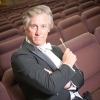
Wes Kenney was recently named a 2020 Honored Artist by The American Prize. He is now in his nineteenth year as professor of music and director of orchestras at Colorado State University where he conducts the CSU Symphony and Chamber Orchestra as well as CSU Opera productions and teaches graduate conducting. Mr. Kenney has led the orchestra to many new milestones, including first ever at CSU performances of Stravinsky’s Rite of Spring, Mahler symphonies No. 1 and 5, two Strauss tone poems, the Bartok Concerto for Orchestra, and the Bruckner Symphony No. 5. In 2014 he was named music director of the Denver Young Artists Orchestra—the premiere youth orchestra in the state of Colorado—and has taken that orchestra on two tours through Italy, France, Austria, Czech Republic, and Spain. He has also led them in two well-received concerts at Carnegie Hall. With Mr. Kenney on the podium, DYAO has won multiple prizes for its performances and presentation of contemporary music.
Mr. Kenney is also currently in his 19th season as music director of the fully professional Fort Collins Symphony. The Fort Collins Symphony recently won the 2020 American Prize in Orchestral Performance in the professional division for its 2019 performance of the Shostakovich Symphony No. 9. Also notable, this past year the FCS was the only orchestra in the country to play a live concert on July 4, 2020. From 2004-2020 he served in the additional post of music director of Opera Fort Collins, helping that organization establish a full season of three productions a year. Mr. Kenney was named the 2009 Outstanding Teacher by the Colorado American String Teachers Association. He was also awarded the Grand Prize in the summer 2007 Varna (Bulgaria) International Conducting Competition. He traveled back to Bulgaria in 2008 for concerts in Vidin and to conduct La Traviata in Stara Zagora.
Mr. Kenney is a frequent guest conductor of professional and educational ensembles. Recent appearances include the Lviv (Ukraine) Philharmonic, Changwon (South Korea) Philharmonic, Vietnamese National Symphony Orchestra (Hanoi), Colorado Symphony, Colorado Music Festival, Lafayette Symphony (Indiana), and the Acadiana Symphony (Louisiana). He has conducted Minnesota All-State, New Mexico All-State, Virginia All-State, Alabama All-State, and New Hampshire All-State Orchestra. He has given orchestra clinics in all corners of Colorado and is sought after for sessions at the Colorado Music Educators Association Conference. Mr. Kenney is a former president of the Conductors Guild and serves currently on their advisory board.
Mr. Kenney is also in demand as a conducting pedagogue. He has taught alongside Jorge Mester in a Conductors Guild sponsored workshop at CSU and Larry Livingston at CMEA. He has been a guest lecturer at the Conductor’s Institute held at Bard College in upstate New York, teaching alongside founder (and the late) Harold Farberman and American Symphony Orchestra Music Director Leon Botstein. He is also one of the founders of the CSU Summer Master’s Degree program in conducting, designed to allow Music Educators the opportunity to earn a graduate degree while furthering their conducting studies and remaining in their current position.
This graduate degree is delivered primarily online with three required, on-campus seminars in Fort Collins, Colorado (seminars last approximately 2.5 weeks). These on-campus seminars provide important, hands-on training that can't be obtained online.
This program gives you the flexibility to get the degree you want without a strict timeline, but still requires the same amount of work and time as an on-campus program. It is recommended that students allow nine to twelve hours per week for a three-credit course. This will vary depending on your learning and studying style.
Your interaction with the faculty and fellow students depends on the specific course. Online courses provide you with online office hours and email contact. You also collaborate on projects and exchange ideas with fellow classmates through email and discussion board postings.
In addition to the Conducting Seminar comprised of three consecutive summer sessions worth four credits each and an on-campus graduate recital, you complete 17 graduate-level credits which can be done online or on campus. Of the total 30 credits for this degree, a minimum of 24 must be earned at CSU.
During your final semester of coursework, successful completion of oral examinations must occur before the master's degree is awarded. A final public conducting project during the third summer serves as the Master's Recital.
With this graduate degree, you take a variety of courses in advanced conducting, score preparation, rehearsal strategies, the Laban method for expressive conducting, curriculum development, jazz pedagogy, and historical performance and practice.
Note: One music elective course (3 cr.) will also be chosen in consultation with your advisor
The Summer Conducting Seminar curriculum includes topics such as:
Note: The next Summer Conducting Seminar will take place June 26 - July 11, 2026.
For more information about admissions into this program, please contact Adam Torres.
A maximum of six credits can be accepted from NASM-accredited universities.
As a student in CSU’s online conducting master’s program, you receive the same education, learn from the same faculty, and earn the same regionally accredited degree as students on campus. Additionally, you can expect:
| Summer semester | February 15 |
Start your application online and upload materials directly into the online system. You can save your progress and return any time.
Apply NowNote that meeting the minimum department standards does not ensure admission to the program. Admission to Colorado State University graduate programs is based on a number of factors, including prior academic and professional experience and the personal statement.
Prepare the materials below and upload when you apply online.
Complete the online graduate application form and pay the nonrefundable application processing fee (payable online). As soon as you have completed the required information, please submit your application. Your application will not be reviewed until it is complete and all required materials have been received.
CSU's Graduate School offers several application fee waiver opportunities. Visit their website to determine if you are eligible for a waiver.
Request one official transcript of all collegiate work completed from all institutions attended. Transcripts from Colorado State University are not required. Transcripts must be received directly from the originating institution to be considered official.
Please Note: Students may be unconditionally admitted and registered in their first semester of courses with an unofficial transcript. Official transcripts must be submitted, prior to or during your first semester, before you can register for your second semester of graduate work. Failure to meet this condition will result in your dismissal from the Graduate School.
Electronic (preferred): Digital Transcripts must be submitted by the originating institution using a secure service such as parchment, eScrip-Safe, the National Student Clearinghouse, or e-Quals. Transcripts received via emails are considered unofficial. Use institution code 4075 for Colorado State University or gradadmissions@colostate.edu if the secure service requires an email address.
Mail (if necessary) Graduate Admissions Colorado State University – Office of Admissions 1062 Campus Delivery Fort Collins, CO 80523-1062
View your application status at any time to ensure your application checklist is complete or to check on updates.
Once your complete application, including supporting materials, is received, the department admission committee will review your application and notify you of their decision.
Proof of English language proficiency is required for applicants from countries or United States territories where there are official languages other than (or in addition to) English. This includes the U.S. territories of American Samoa, Guam, the Northern Mariana Islands, and Puerto Rico.
We love learning about your goals and answering any questions you have.