All academic credit courses will be viewable on Monday, April 6 at 12 PM MST, with registration opening on April 20, 2026. Noncredit courses, including Professional and Continuing Education and Extension Programs, follow a separate scheduleAll academic credit courses will be viewable on Monday, April 6 at 12 PM MST, with registration opening on April 20, 2026. Noncredit courses, including Professional and Continuing Education and Extension Programs, follow a separate schedule
Select one of the options below:

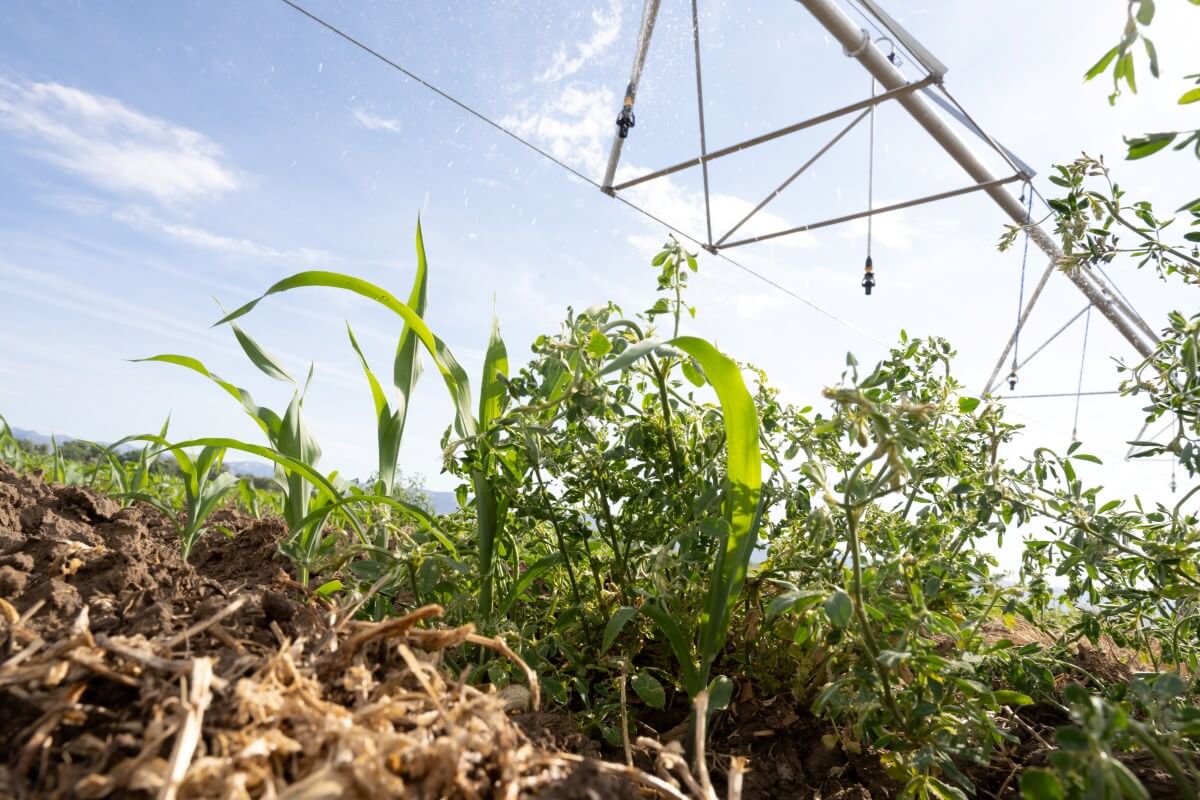
Today’s weed management challenges require strong scientific insight and practical, systems‑based strategies. The Graduate Certificate in Weed Science at Colorado State University provides advanced training in weed biology, herbicide science, resistance management, and integrated pest management in a flexible format suited for working professionals and graduate students.
This online program delivers focused, graduate‑level instruction grounded in real‑world application, helping you build the skills to diagnose weed issues, evaluate management options, and apply science‑based solutions across diverse cropping systems and landscapes.
Courses are taught by nationally recognized weed science faculty whose work shapes industry best practices, regulatory standards, and global research agendas. Whether your goal is professional advancement or preparation for future graduate study, this certificate strengthens your technical credibility in a rapidly evolving field.
Program highlights include:
Colorado State University is a national leader in agricultural and environmental sciences. Our weed science program reflects CSU’s commitment to research excellence, applied learning, and workforce relevance.
What sets this weed science certificate apart:
This graduate certificate in weed science is designed for flexibility and momentum.
Whether you’re enhancing your current role or positioning yourself for the next step, this certificate adapts to your goals.
This program is ideal for:
If your work intersects with crop management, sustainability, regulatory science, or natural resource protection, this weed science certificate provides the depth and credibility to move forward with confidence.
Graduates of the Graduate Certificate in Weed Science are prepared for a wide range of roles across agriculture, industry, government, and research, including:
Weed management is central to agricultural productivity, environmental stewardship, and food system resilience. The online graduate certificate in weed science from Colorado State University empowers you to address these challenges with scientific rigor, practical insight, and professional confidence. Take the next step in weed science and in your career.
Program Total Credits: 10

Franck Dayan was born in Lyon (France) and grew up in the south of France. He attended the Institut Agricole de Fontlongue where he developed an appreciation for plant science and agriculture. He received his Ph.D. in Plant Physiology from Auburn University in Alabama in 1995 and worked as a Research Plant Physiologist with the USDA-ARS Natural Products Utilization Research Unit for 20 years. He is now professor in the Department of Agricultural Biology at Colorado State University. His work covers the mechanisms of action of natural and synthetic herbicides and the mechanisms of herbicide resistance in plants, as well as chemical ecological studies of plant-plant interactions (allelopathy). He has served as treasurer of the Phytochemical Society of North America from 2006 to 2011 and president of that society in 2014-2015. He also served as treasurer for the International Weed Science Society (2012-2016). He is an Associate Editor for Weed Science and Pesticide Biochemistry and Physiology as well as North American Editor for Outlooks on Pest Management.

Dr. Todd Gaines is an Associate Professor in the Department of Bioagricultural Sciences and Pest Management at Colorado State University. His specialization is in molecular weed science and functional weed genomics. He grew up on a wheat farm in Colorado and completed his PhD in weed science at CSU, followed by post-docs in Western Australia (University of Western Australia, Australian Herbicide Resistance Initiative with Prof. Stephen Powles) and Germany (Bayer CropScience, Weed Resistance Competence Center). His research goal is to support sustainable weed management in cropping systems. Projects in his research group include identifying the molecular and genetic basis of herbicide resistance mechanisms and other genetic traits in weeds, and developing rapid molecular diagnostics for herbicide resistance.

My research goal is to learn how necrotrophic bacterial pathogens cause disease in plants. My lab focuses on Pectobacterium and Dickeya, which are broad host range bacterial pathogens and we study how these bacteria infect potato and how to best detect these pathogens in potato and in the environment. We are also interested in other high impact potato pathogens, especially Potato virus Y, and are currently working on projects related to virus resistance and detection in potato.
| Fall semester | July 15 |
| Spring semester | December 1 |
Start your application online and upload materials directly into the online system. You can save your progress and return any time.
Apply NowComplete the online graduate application and pay the nonrefundable application processing fee (payable online). As soon as you have completed the required information, please submit your application. Your application will not be reviewed until it is complete and all required materials have been received.
Request one official transcript from the institution where you earned your bachelor’s degree. Transcripts from Colorado State University are not required. Transcripts must be received directly from the originating institution to be considered official.
Electronic (preferred): Digital Transcripts must be submitted by the originating institution using a secure service such as parchment, eScrip-Safe, the National Student Clearinghouse, or e-Quals. Transcripts received via emails are considered unofficial. Use institution code 4075 for Colorado State University or gradadmissions@colostate.edu if the secure service requires an email address.
Mail (if necessary): Graduate Admissions Colorado State University – Office of Admissions 1062 Campus Delivery Fort Collins, CO 80523-1062
View your application status at any time to ensure your application checklist is complete or to check on updates.
Once your complete application, including supporting materials, is received, the department admission committee will review your application and notify you of their decision.
Proof of English language proficiency is required for applicants from countries or United States territories where there are official languages other than (or in addition to) English. This includes the U.S. territories of American Samoa, Guam, the Northern Mariana Islands, and Puerto Rico.
We love learning about your goals and answering any questions you have.